

Short answer: The best time of year for teen driving lessons in Louisiana is October through February. Starting in fall gives Louisiana teens 6-14 months of supervised practice in varied conditions before they meet the “100 Deadliest Days” – the Memorial Day to Labor Day stretch when teen-driver crash deaths average 8 per day nationally, up from 7 the rest of the year.
Every Louisiana parent eventually hits the same fork in the road: when do you sign your teen up for driver’s ed? Most families default to summer because school’s out and the calendar’s open. The data suggests that’s the riskiest possible time to put a brand-new driver behind the wheel. Between Memorial Day and Labor Day 2023, 860 people died in U.S. crashes involving a teen driver – a 21% jump over the prior year, according to the AAA Foundation for Traffic Safety’s 2025 update on the “100 Deadliest Days.”
This guide walks through when Louisiana teens should start lessons, why the season matters here in particular, and how to build a 12-month plan that doesn’t trade safety for convenience.
The National Safety Council’s Injury Facts tallied 2,320 teen-driver-involved fatalities in 2024 using NHTSA’s FARS data – 752 of those killed were the teen drivers themselves. Speeding factored into 33% of those fatal crashes. Fifty-one percent of the teens killed weren’t wearing a seatbelt. These aren’t abstract numbers – they describe specific conditions that timing decisions can either amplify or soften.
The Insurance Institute for Highway Safety tracks a fatal crash rate per mile for 16-19-year-olds that runs nearly three times the rate for drivers over 20. That gap closes only one way: supervised hours behind the wheel in varied conditions. So timing isn’t really about convenience. It’s about whether your teen hits the riskiest stretch of their first licensed year with enough practice to handle it.
Parents often assume their teen needs to be “ready” before starting. The data flips that. Starting earlier, when stakes are lowest and parental supervision is highest, is what builds readiness – not the other way around.
The short answer: late fall through early spring, roughly October through February. Why? You get cooler temperatures, lower tourist and recreational traffic, a natural progression from short daylight to long, and a calendar that lands your teen at full license eligibility before peak summer crash season – not after the danger has already passed.
Summer enrollment isn’t wrong, but it stacks risk. Your teen finishes class in July, gets their permit, and immediately enters an environment where roads are jammed with vacationers, daylight is brutal on glare, thunderstorms appear in 30 minutes, and the “100 Deadliest Days” are in full swing. Compare that to a fall start: by the time summer arrives, your teen has 6-8 months of supervised practice in everything from drizzle to fog to night driving.
At Magnolia Driving Academy, we see two clear demand spikes – early summer and the weeks right before back-to-school. Fall and winter classes consistently have shorter waits, smaller group sizes, and more flexible behind-the-wheel scheduling. That’s a quiet advantage most families don’t realize they have.
Between 2019 and 2023, 13,135 people died in U.S. crashes involving a teen driver, and more than 30% of those deaths landed in the summer stretch from Memorial Day through Labor Day – the headline finding from the AAA Foundation’s May 2025 update. On an average day in that window, 8 people die in teen-driver crashes nationally. The rest of the year averages 7 per day. The gap looks small until you multiply it across 100 days.
Why the spike? Teens are out of school, driving more, often without adult passengers, often at night, and frequently on roads they don’t know well – vacation routes, beach trips, friends’ neighborhoods. Add the standard distractions (phones, peer passengers, music) and the conditions stack up. The CDC consistently lists peer passengers and nighttime driving as the two biggest risk factors for new drivers.
Does that mean don’t drive in summer? No. It means don’t start in summer if you have a choice. A teen who’s logged 50+ hours of supervised driving before Memorial Day weekend handles the same hazards very differently than one with two weeks of classroom theory.

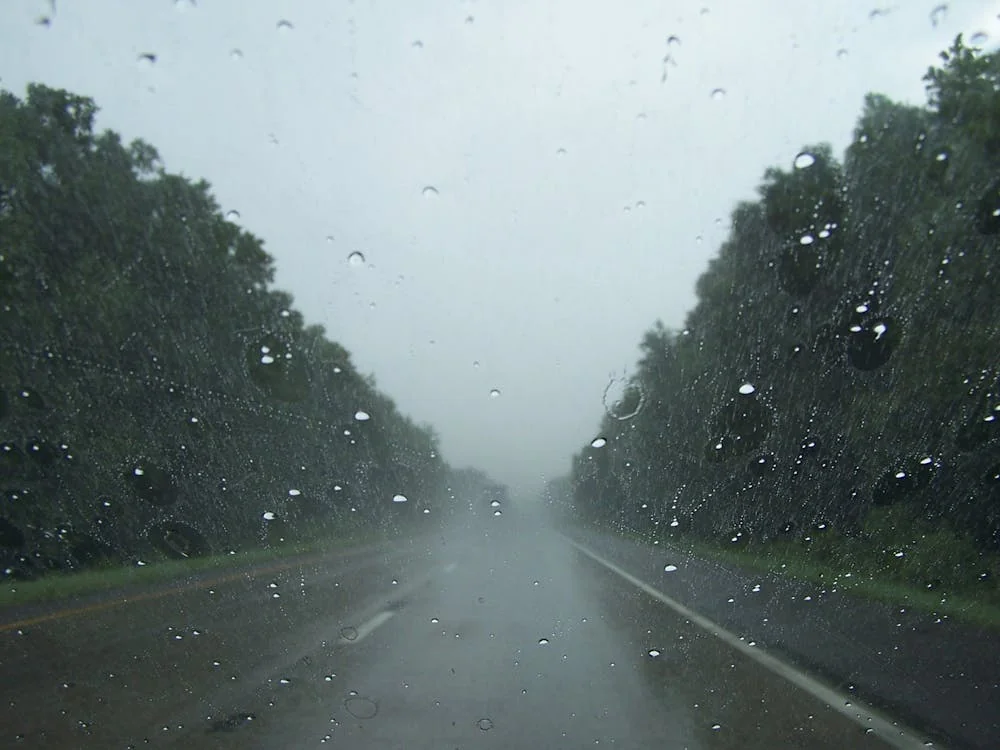
Louisiana isn’t a “mild weather year-round” state – and pretending otherwise builds drivers who can’t handle what’s coming. South Louisiana averages 57 to 66 inches of rain per year, with NOAA’s 1991-2020 climate normals putting New Orleans at 63.4 inches and Slidell at 66.2 inches. Hurricane season runs June 1 through November 30. Summer thunderstorms can drop visibility to nothing in 10 minutes, and the morning sun angle in winter creates blinding glare on east-west streets.
A fall or winter start exposes new drivers to genuine weather variety on a slower curve. October still has warm-weather practice. November brings rain and earlier sunsets. January means cold-start driving and fog. By March, your teen has felt all of it under supervision – instead of meeting it alone with three months of permit time.
Louisiana allows teens to enroll in driver’s education starting at 14 years 9 months, with the full Class E learner’s permit available at age 15 once they pass the OMV knowledge test at 80% or higher and complete the 30 hours of classroom plus 8 hours behind-the-wheel instruction. The intermediate license follows at 16, and a full Class E at 17. The learner’s permit must be held for at least 180 days.
Why does an early start matter? More practice time. A teen who gets their Louisiana learner’s permit on their 15th birthday and their intermediate at 16 has logged a full year of supervised driving. A teen who waits until 16 to start has months – sometimes weeks – before they’re driving with peer passengers under the intermediate license restrictions. Less practice equals more risk. A peer-reviewed Nebraska study tracking roughly 150,000 teen drivers over eight years found that those who skipped driver’s education were 75% more likely to receive a traffic ticket and 24% more likely to be in a fatal or injury crash. Published in Accident Analysis & Prevention in 2015, it’s still the most-cited modern dataset on driver-education outcomes.
Among the families we work with at Magnolia Driving Academy, teens who start at 14 years 9 months and finish their behind-the-wheel hours before turning 15.5 consistently arrive at the Louisiana road skills test calmer, more confident, and with fewer first-attempt failures than those who start later in the timeline.
The Louisiana Highway Safety Commission’s Young Drivers program reports drivers ages 15-20 were involved in 87 fatal crashes and 7,463 injury crashes statewide in 2023. Most of those weren’t first-week-on-the-road incidents – they were six-months-in, license-feels-routine incidents. That’s the dangerous window every parenting plan should target.
Louisiana’s intermediate license carries real restrictions that exist for a reason: between 6 p.m. and 11 p.m. teens can carry only one sibling passenger, and they cannot drive between 11 p.m. and 5 a.m. unless a licensed adult 21+ is in the car. Enforce those restrictions like a fire alarm. They aren’t bureaucratic – they map directly to the conditions where teen crashes spike.
Build a practice schedule that intentionally hits hard conditions on purpose. Night driving on a familiar route. Rain practice in a parking lot before doing it on Airline Highway. Highway merging at off-peak times before rush hour. The skill stack grows by exposure, not by hoping it never comes up.

Here’s the version that works for most families starting in fall. The plan stacks easier conditions first and saves the high-risk summer for after your teen has 6+ months of supervised practice.
| Months | Stage | What your teen practices |
|---|---|---|
| Oct-Nov | Classroom + first behind-the-wheel | Residential streets, parking lot maneuvers, gentle braking, signaling |
| Dec-Jan | Learner’s permit issued | 5-10 hours/week supervised; fog, after-school glare, first rain practice |
| Feb-Apr | Highway introduction | I-10, I-12, or I-220 merging at off-peak; night drives on familiar routes |
| May-Jun | Pre-summer refresh | Reinforce passenger limits, phone-off rules, seatbelt habits |
| Jul-Sep | Intermediate license (age 16) | Continued parental check-ins; first summer under GDL restrictions |
Practice in the rain on purpose. Wait for the first decent storm after the permit is issued, then drive an empty parking lot together. Wet pavement teaches braking and steering feel in 20 minutes that you can’t simulate any other way.
Three things matter more than price: instructor experience, behind-the-wheel scheduling flexibility, and whether the school knows Louisiana road conditions specifically. A program built in Texas or Florida won’t teach your teen about Mississippi River bridge crosswinds, sugarcane truck traffic on rural highways, or the specific way Louisiana drainage handles a 4-inch rain in an hour.
Look for a program that’s state-licensed by the Louisiana OMV, lets you observe a classroom session, and pairs classroom instruction with real-world routes – not just figure-eights in an empty lot. Ask how many behind-the-wheel hours actually happen on highways and at night. Ask whether the dual-control car is maintained and inspected. Ask what happens if your teen needs a make-up session.
Magnolia Driving Academy was built around exactly this checklist. We run state-licensed classroom and behind-the-wheel courses across Louisiana, with routes that include the conditions your teen will actually drive in – not generic ones. If you’re weighing a fall or winter enrollment, that’s typically when our class calendar has the most flexibility and the smallest class sizes.

The Louisiana OMV approves a 38-hour driver’s education course consisting of 30 classroom hours and 8 behind-the-wheel hours. The classroom portion may be offered online through OMV-approved providers, but the 8 behind-the-wheel hours must be in person with a licensed instructor. Verify any program’s OMV approval before enrolling.
Per Louisiana DPS Class E permit requirements, the learner’s permit must be held for a minimum of 180 days before a teen can apply for the intermediate license at 16. The permit itself is generally valid up to two years, giving families flexibility in timing the next step.
Yes – and the data is consistent. The AAA Foundation’s 2025 analysis found an average of 8 people die per day in teen-driver crashes during the 100 Deadliest Days (Memorial Day-Labor Day) versus 7 per day the rest of the year. That gap reflects more teens driving, more peer passengers, more night driving, and unfamiliar vacation routes.
The strongest peer-reviewed dataset is a Nebraska study of about 150,000 teens published in Accident Analysis & Prevention in 2015. It found that those who skipped driver’s education were 75% more likely to get a traffic ticket and 24% more likely to be in a fatal or injury crash. It’s an older study, but no comparable modern dataset has overturned its conclusions.
Time matters. A Louisiana teen who starts driver’s ed at 14 years 9 months in October has roughly 14 months of supervised practice before they hit their first peak summer crash window as an independent driver. A teen who starts in June meets that window with weeks of experience and a permit that’s barely dry. Same kid, same family, same school – radically different odds.
If you’re already in a summer cycle, that’s fine – just front-load the high-risk practice (rain, highway, night) before any solo time. If you have the flexibility to choose, pick fall or winter. Your future driver will be more skilled, less stressed, and a lot less likely to land in someone’s crash statistic.
When you’re ready to look at scheduling, Magnolia Driving Academy runs Louisiana-licensed teen driver’s ed across the state, with fall and winter slots that typically book out faster than parents expect.
Looking at a fall enrollment? Magnolia Driving Academy’s October-February sessions book out 4-6 weeks ahead of class start dates – and they’re the safest window to start a new driver in Louisiana.