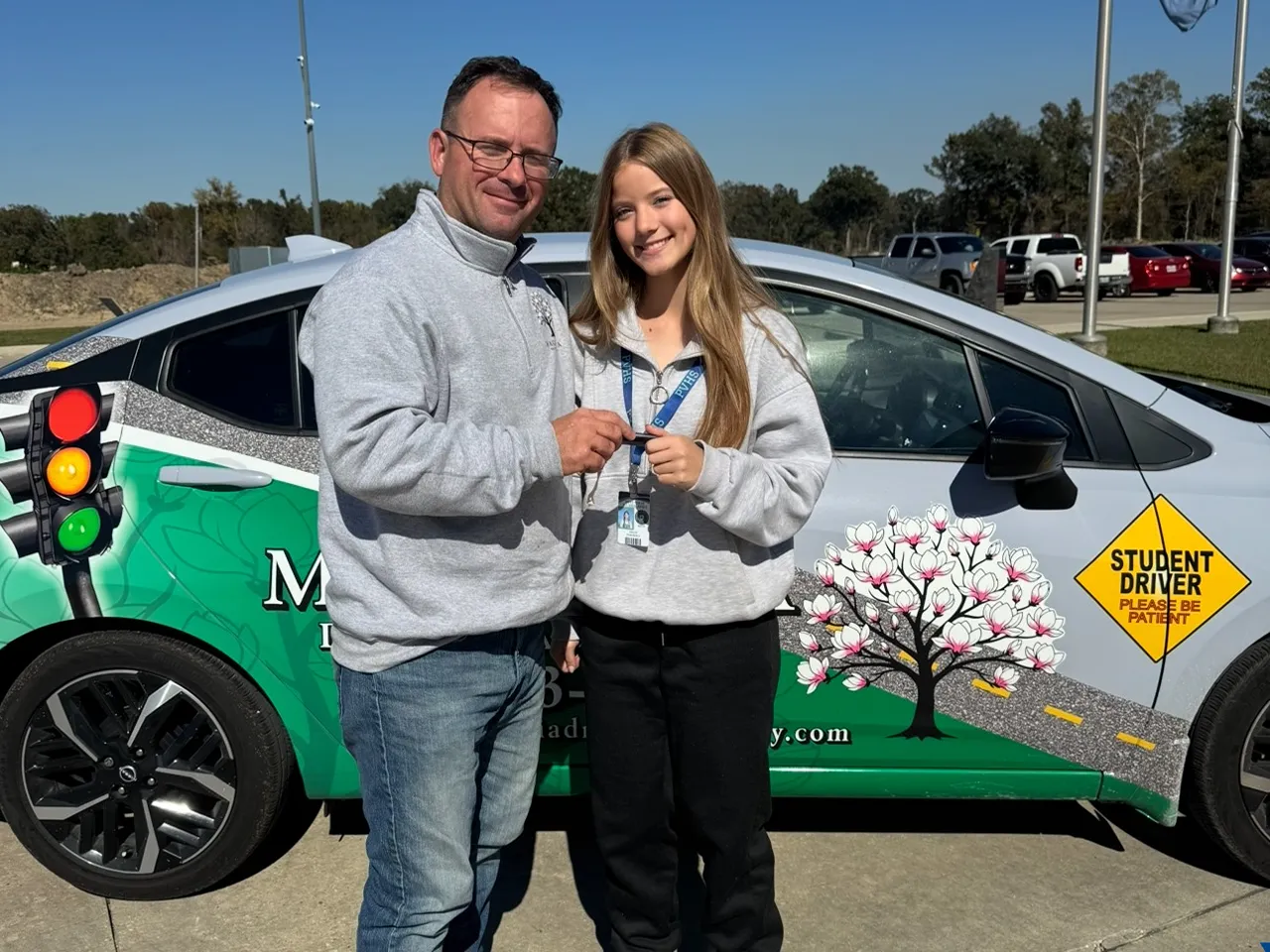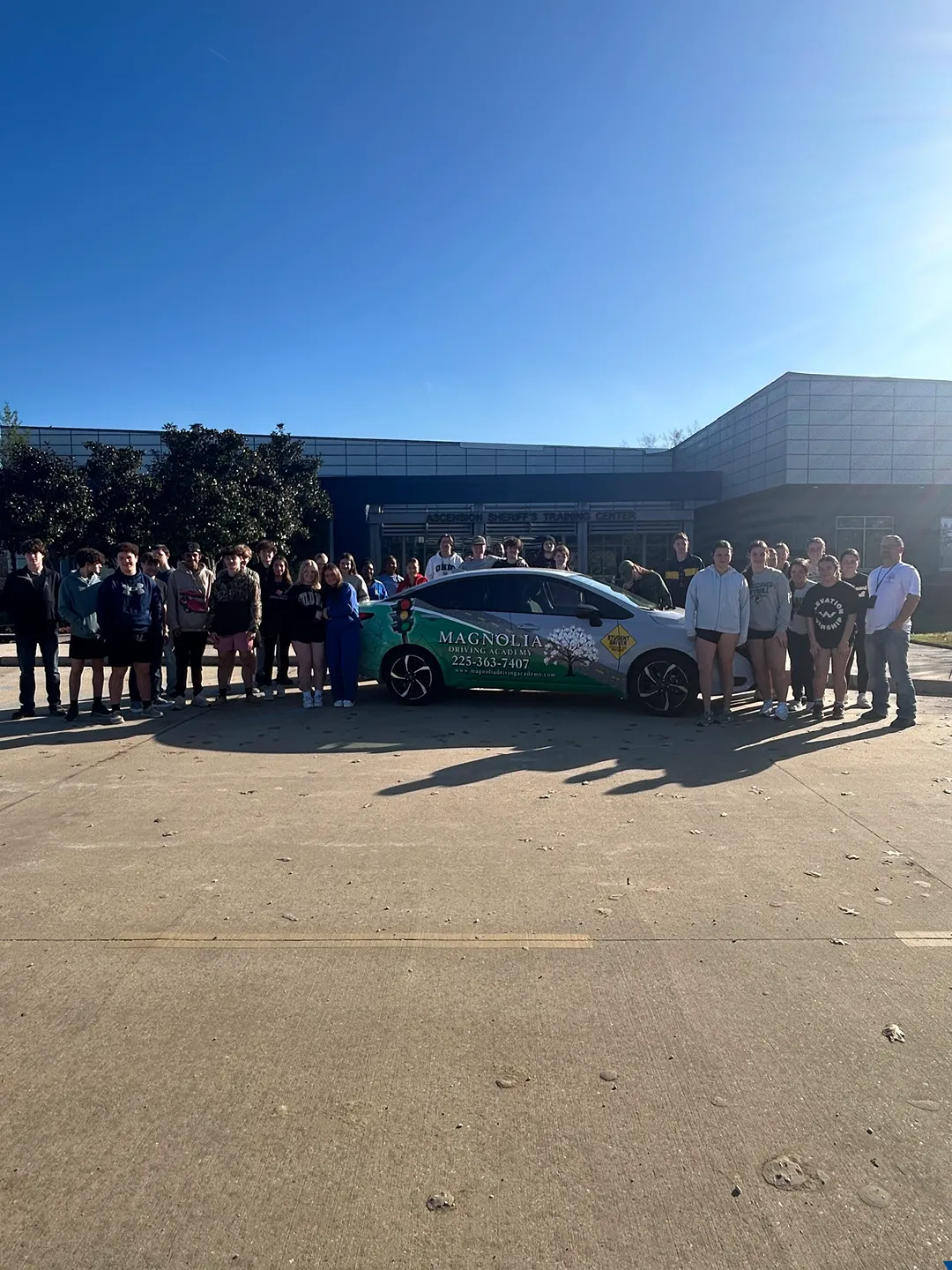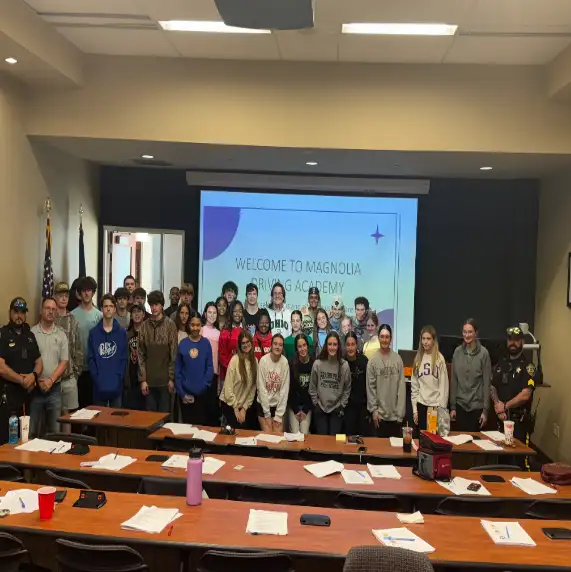


Your first behind-the-wheel lesson in Louisiana is designed to be supportive, helping new drivers and parents feel reassured as instructors guide you through building safe driving habits, mastering basic vehicle control, and learning skills for the Road Skills Test. The instructor uses a dual-brake vehicle and follows the Louisiana Department of Public Safety’s guidelines, creating […]
Your first behind-the-wheel lesson in Louisiana is designed to be supportive, helping new drivers and parents feel reassured as instructors guide you through building safe driving habits, mastering basic vehicle control, and learning skills for the Road Skills Test. The instructor uses a dual-brake vehicle and follows the Louisiana Department of Public Safety’s guidelines, creating a calm, structured environment.
Many students and parents from Gonzales and Prairieville feel anxious before the first lesson. Knowing what to expect and how instructors guide you can help ease nerves. Magnolia Driving Academy follows Louisiana standards and teaches at a comfortable pace, making the learning process steady and predictable, helping both teens and parents feel better prepared.
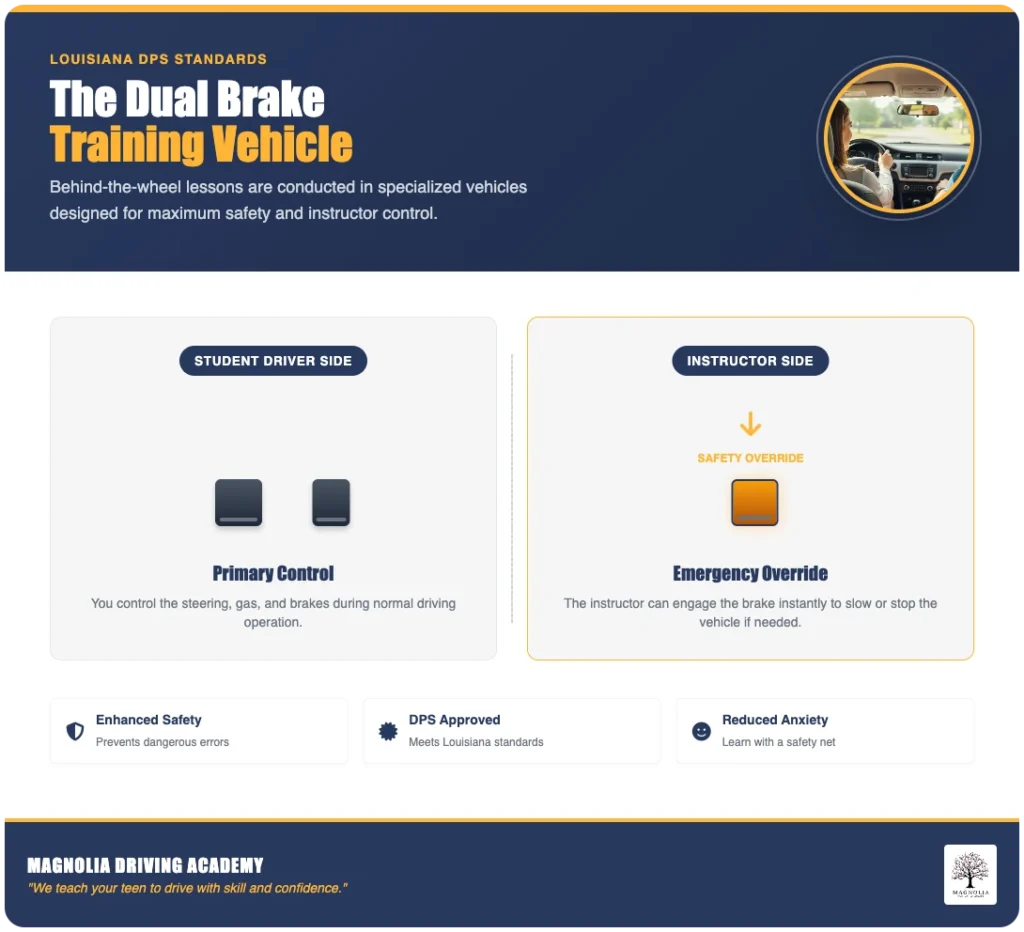
Before understanding the exact skills you will practice, you should know how training vehicles work in Louisiana driver education:
The dual-brake training vehicle used in Louisiana lessons is equipped with instructor-controlled brakes, ensuring safety during practice. Magnolia Driving Academy uses vehicles that meet Louisiana Department of Public Safety standards, so parents can be confident that safety is a top priority during every lesson.
Now that you know how the vehicle is set up, here is what the first few minutes of your lesson will look like:
The instructor greets you, reviews your permit, adjusts the seat and mirrors with you, and explains the controls. Students usually spend a few minutes getting a feel for the brakes and steering before moving the vehicle. This warmup is especially helpful for teens who have never driven before.
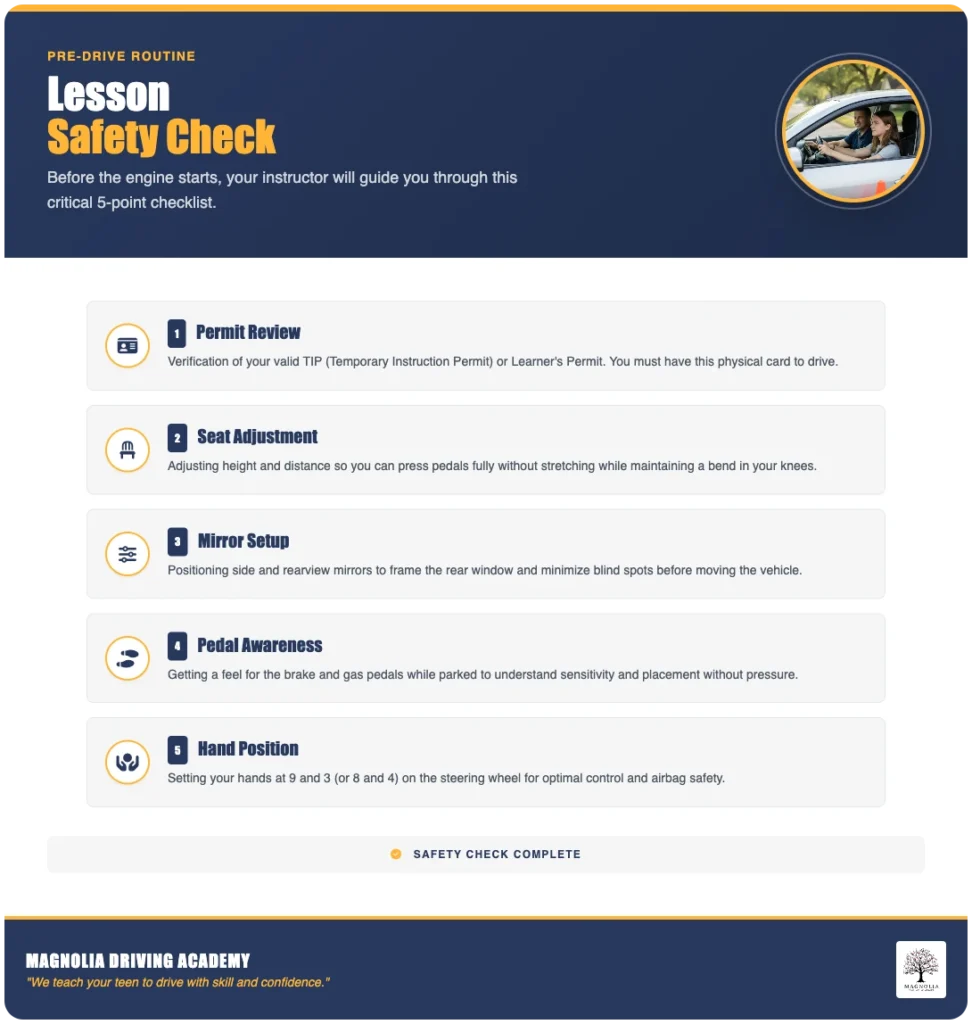
Once the safety check is complete, the instructor moves into the first set of beginner-level driving tasks:
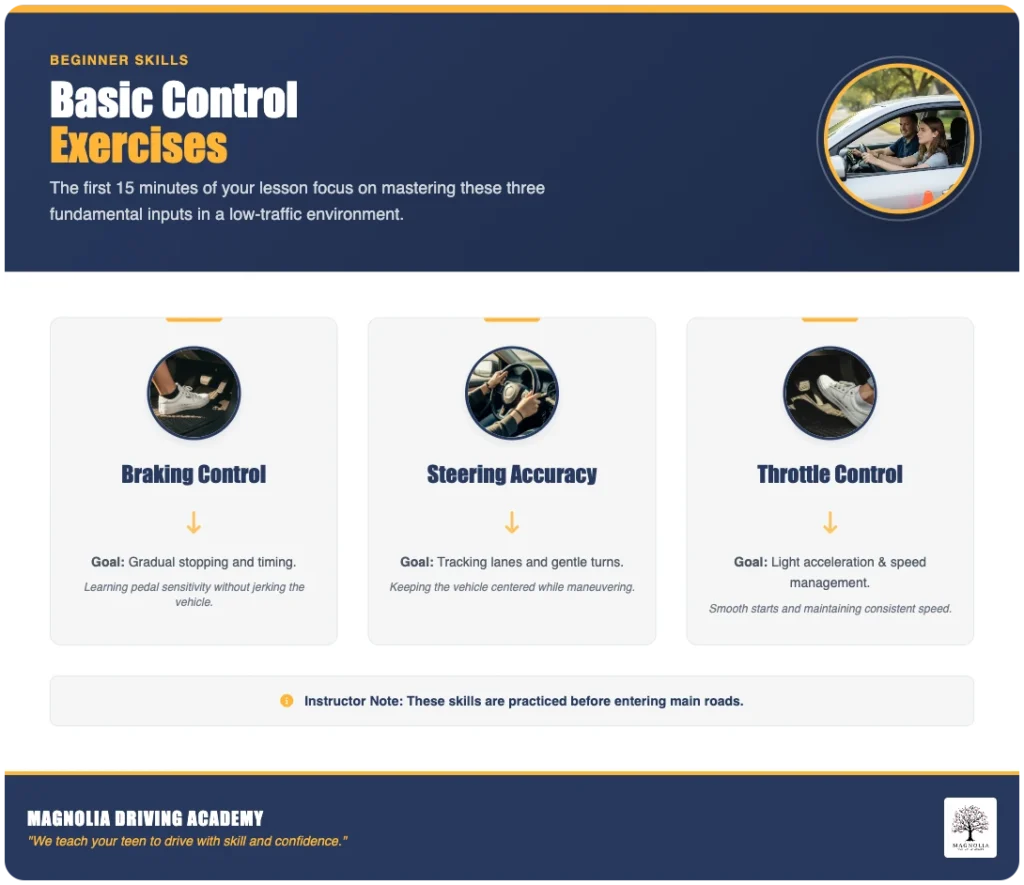
These exercises introduce you to smooth acceleration, controlled braking, and steering accuracy. The session begins typically in a low-traffic area so you can learn without pressure.
| Exercise | What You Practice | Notes |
| Braking Control | Gradual stopping and timing | The instructor may use the dual brake for support |
| Steering Accuracy | Tracking lanes and gentle turns | Common starting point for beginners |
| Throttle Control | Light acceleration and speed management | Low traffic areas reduce pressure |
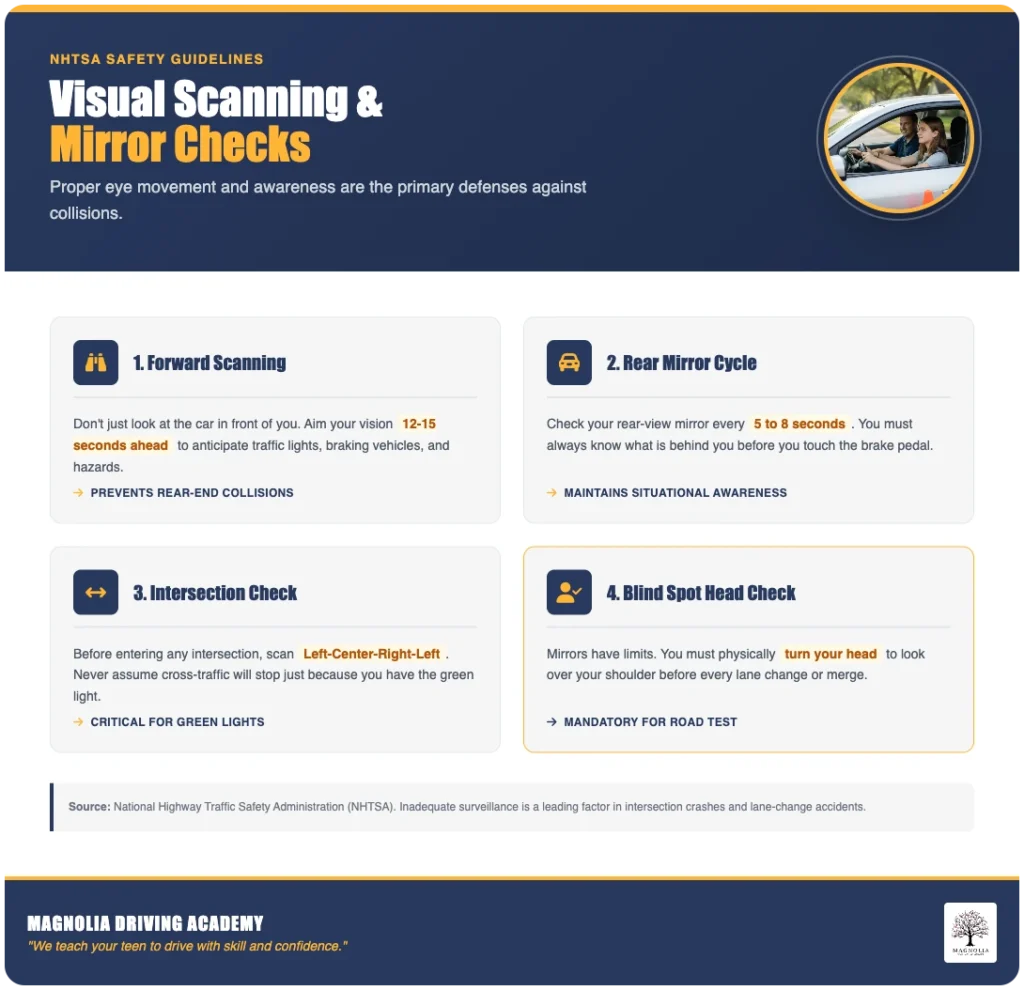
After you show basic control, the instructor introduces the same scanning habits Louisiana examiners look for during the Road Skills Test:
Many first lessons focus on daytime conditions, but teens also need to learn how driving changes at night. This night driving guide explains the added risks Louisiana teens face after dark and the habits instructors reinforce to keep them safe.
The National Highway Traffic Safety Administration reports that inadequate scanning is one of the top contributors to teen crashes. Instructors coach you to move your eyes, check your mirrors, and look ahead to anticipate hazards. These scanning patterns help you pass the Road Skills Test and make you safer in everyday driving.
Once your scanning improves, the instructor guides you into real road environments at a pace that matches your comfort level:
Most students drive into quiet neighborhood streets after 10 to 20 minutes of warm-up. The instructor handles route selection so you can focus on driving. Skills practiced include:
After you handle early turns and stops, your instructor builds on each skill to prepare you for more advanced maneuvers:
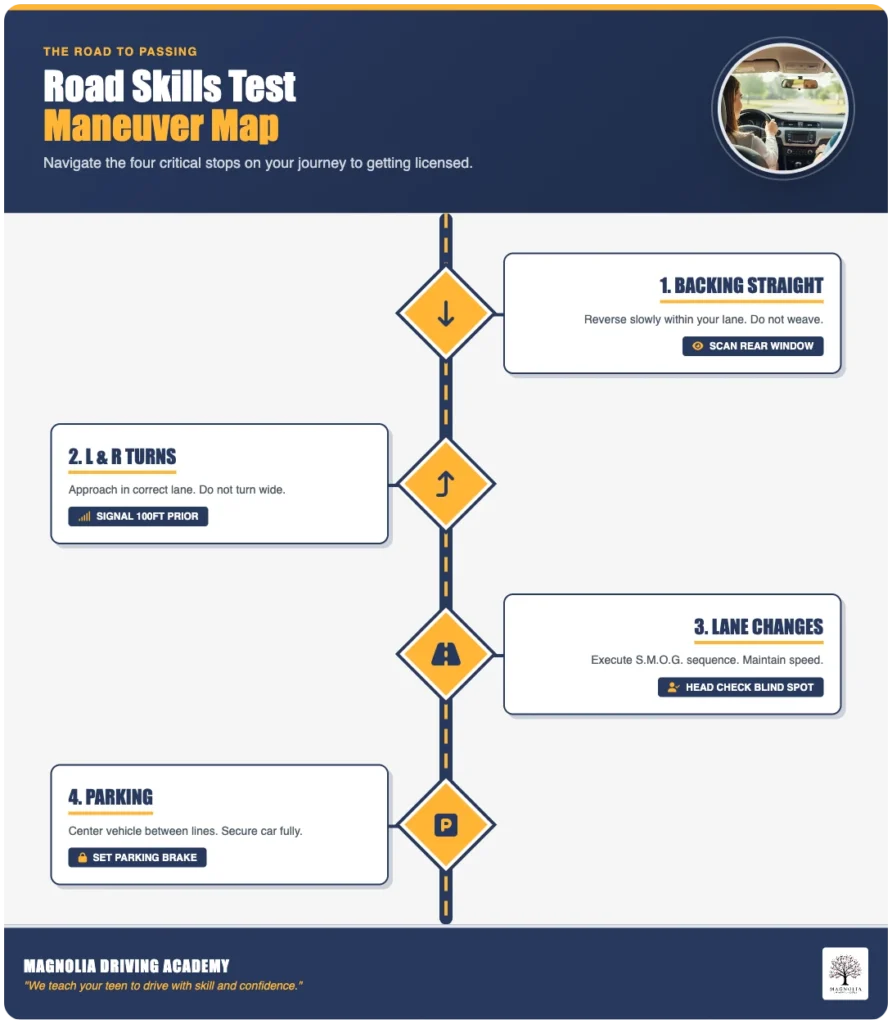
Louisiana examiners evaluate several predictable maneuvers during the Road Skills Test. Instructors teach these gradually so you can practice the exact movements examiners will score.
| Maneuver | What You Learn | Purpose |
| Backing Straight | Steering and rear visibility | Required test maneuver |
| Right and Left Turns | Control and lane placement | Scored by Louisiana examiners |
| Parking | Accuracy and depth perception | Varies by test location |
| Lane Changes | Mirror and shoulder checks | Common point deduction for new drivers |
With the core maneuvers underway, instructors help new drivers build calm confidence behind the wheel:
Students from Gonzales, Prairieville, and Sorrento often feel nervous at first. Instructors coach with clear explanations and predictable steps. Once you complete the basics, you progress to moderate-traffic areas, broader intersections, and flow-control skills.
Before ending the session, instructors use the final minutes to review performance so you know what to work on next:
The instructor provides a clear summary of strengths and areas for improvement. They may recommend additional practice at home or schedule your next behind-the-wheel session based on your skill level. Many students add a practice session before their Road Skills Test to reduce nerves.
If you want a real example of how the first lesson usually unfolds, here is a familiar scenario from Ascension Parish:
A 15-year-old from Prairieville began their first behind-the-wheel session unsure about steering control. During the first 15 minutes, they practiced slow turns and lane tracking in a quiet subdivision. By the end of the hour, they completed several controlled turns, full stops, and early scanning techniques. The steady progress built confidence and set them up well for later lessons.
Now that you have a complete overview of what the lesson includes, here are common questions parents and students ask before signing up:
Before booking your first lesson, review these common questions asked by new drivers across Gonzales, Prairieville, and St. Amant:
A standard behind-the-wheel lesson lasts about one hour. Instructors follow Louisiana DPS guidelines and teach required skills at a comfortable pace.
Yes. Louisiana requires a valid permit or a Temporary Instruction Permit before any behind-the-wheel instruction begins.
No. Behind-the-wheel lessons in Louisiana must take place in a dual brake training vehicle operated by the driving school.
Yes, but only after practicing basic control. Most students start in a low-traffic area, then move into neighborhood streets once they show control.
Students learn braking control, steering, scanning, turning, lane placement, and early Road Skills Test maneuvers.
Once you understand these basics, you can schedule your session with confidence and begin Louisiana driver education the right way.
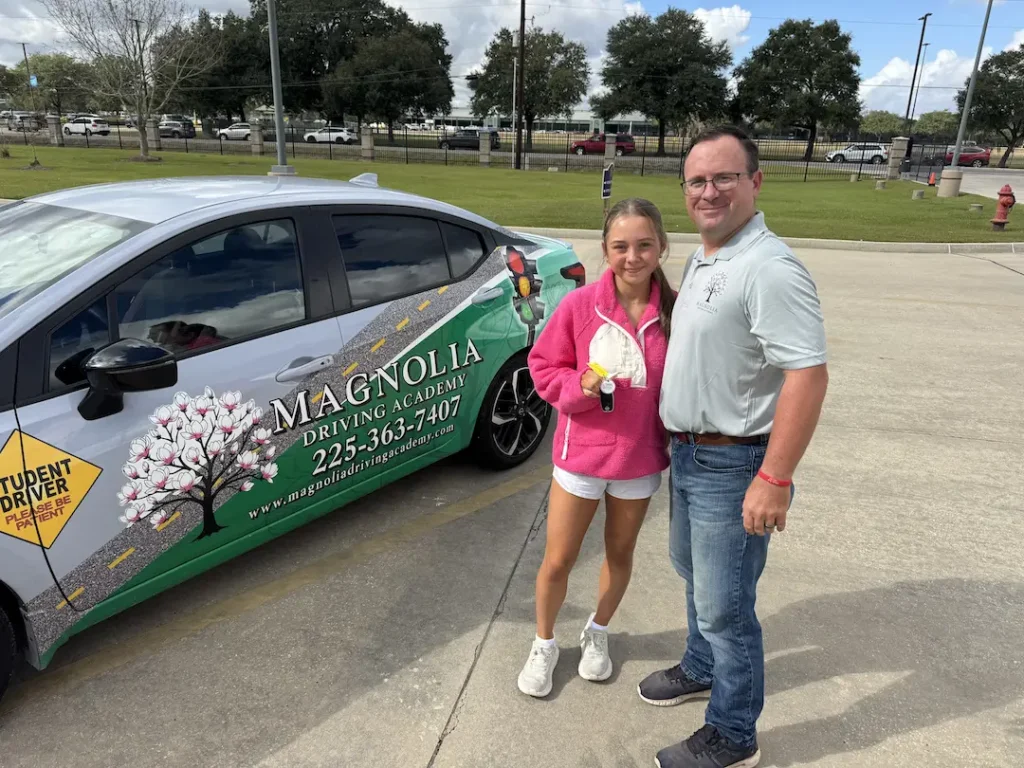
Your first behind-the-wheel lesson sets the foundation for safe, confident driving in Louisiana. Magnolia Driving Academy offers dual-brake vehicles, professional instruction, and structured training that prepare you for the Road Skills Test and everyday driving.
Book your session today and take the next step toward becoming a licensed driver.