
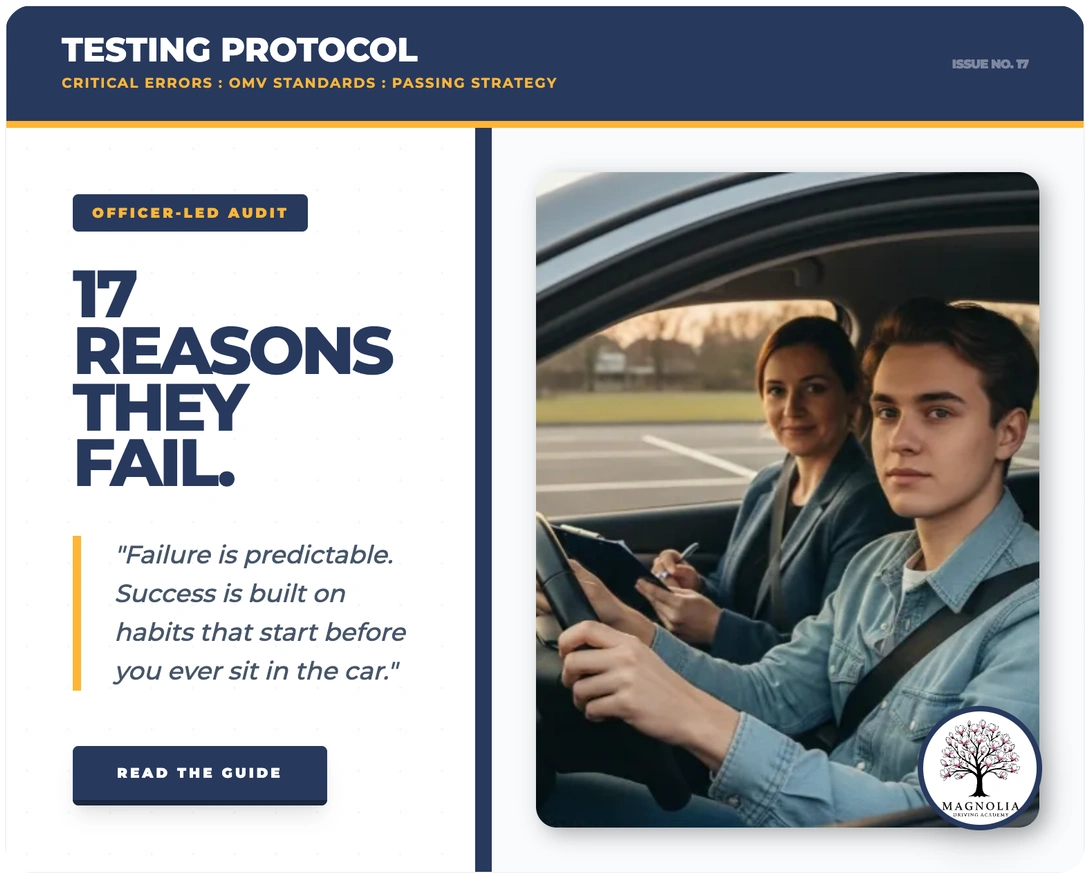
Taking your driving test is a major life milestone, but it’s also a significant source of stress for many. It’s not just about handling a car; it’s about proving to an examiner that you have the judgment, awareness, and skills to be a safe and responsible driver. While the written knowledge test is straightforward for most, the practical road test is where many learners falter.
Many test failures are attributable to weak hazard recognition, which is even more dangerous at night. Our recent article Night Driving Tips For Teen Drivers In Louisiana explains how night driving affects visibility, reaction time, and judgment for new drivers.
Understanding the common pitfalls is the first step toward success. This guide breaks down the top 17 reasons people fail their driving test and provides actionable advice on how to avoid these critical errors. Let’s get you ready to pass with flying colors.
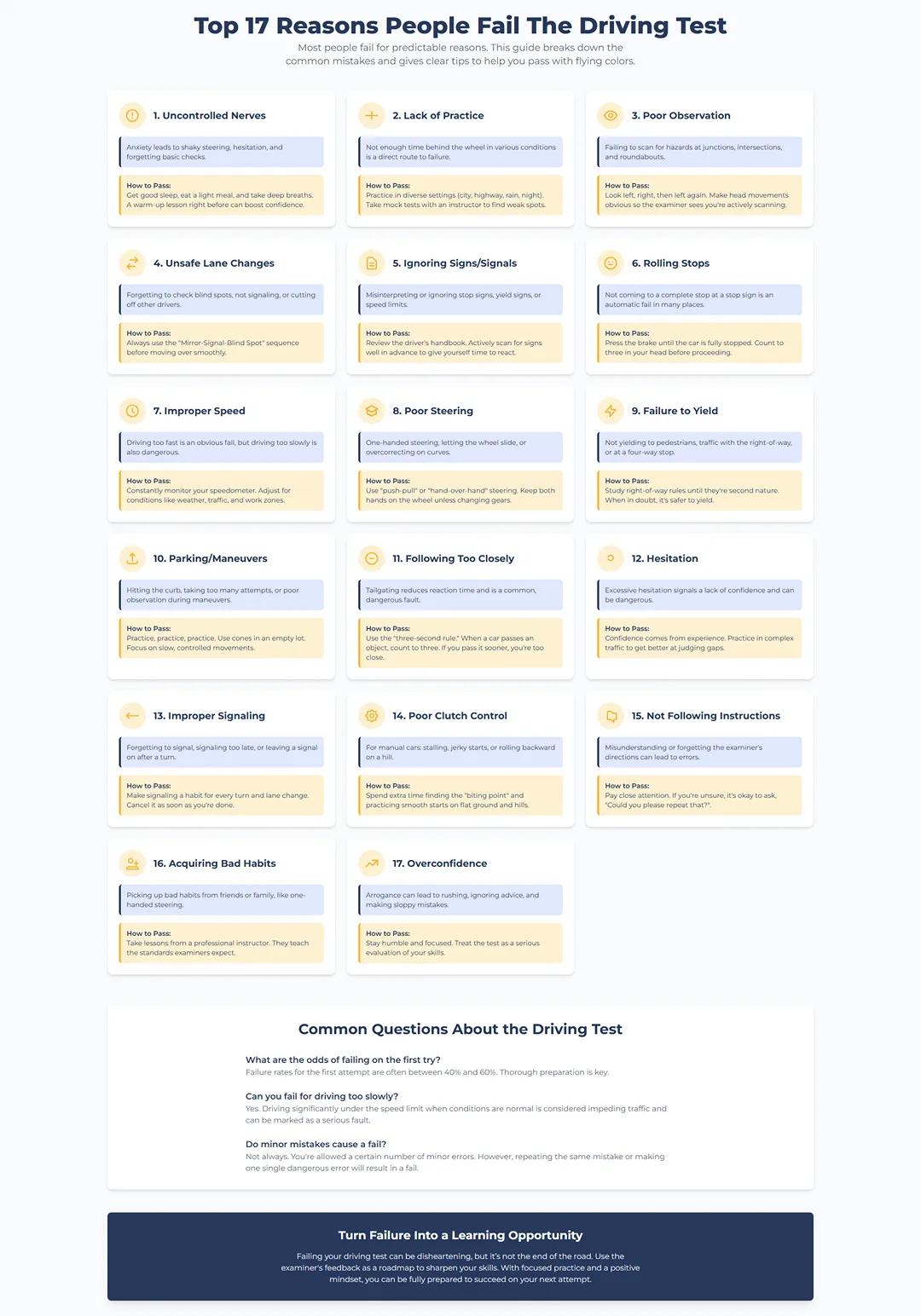
Examiners look for a pattern of safe and confident driving. A single minor error might not fail you, but repeated mistakes or a single major violation will. Here are the most common reasons candidates are unsuccessful.

The pressure of being evaluated can make even the most practiced learner anxious. Nerves can lead to a shaky steering wheel, poor decision-making, and forgetting fundamental checks. Common signs include hesitating at green lights or rushing through maneuvers you’ve perfected in practice.
How to Avoid It: Manage your stress before test day. Get a good night’s sleep, eat a light meal, and practice deep breathing exercises to help you feel refreshed and energized. Schedule a warm-up lesson with your instructor right before the test to build confidence. Don’t be afraid to take a moment to compose yourself if you feel overwhelmed.

There is no substitute for time spent behind the wheel. A lack of sufficient practice is one of the most direct routes to failure. Quality is just as important as quantity; you need experience in various conditions and environments.
How to Avoid It: Aim to practice in different settings (residential, city, highway) and conditions (rain, night). Work with a qualified instructor to identify and correct your weaknesses. Taking several mock tests can simulate the real experience and identify areas that need improvement.

One of the most critical errors is failing to make effective observations, especially when exiting junctions, navigating roundabouts, or approaching intersections. Examiners need to see that you are actively scanning for hazards from all directions.
How to Avoid It: Develop a consistent “mirror-signal-maneuver” routine. At junctions, look left, right, and then left again before proceeding. Make your head movements obvious so the examiner can see you are actively observing your surroundings.

Changing lanes is a high-risk maneuver if not done correctly. Failing to check blind spots, not signaling, or cutting off another vehicle are serious errors that can result in an immediate fail.
How to Avoid It: Always follow the proper sequence: check your mirrors, signal your intention, check your blind spot with a shoulder check, and then, only when it’s safe, move over smoothly. Never rely solely on your mirrors.
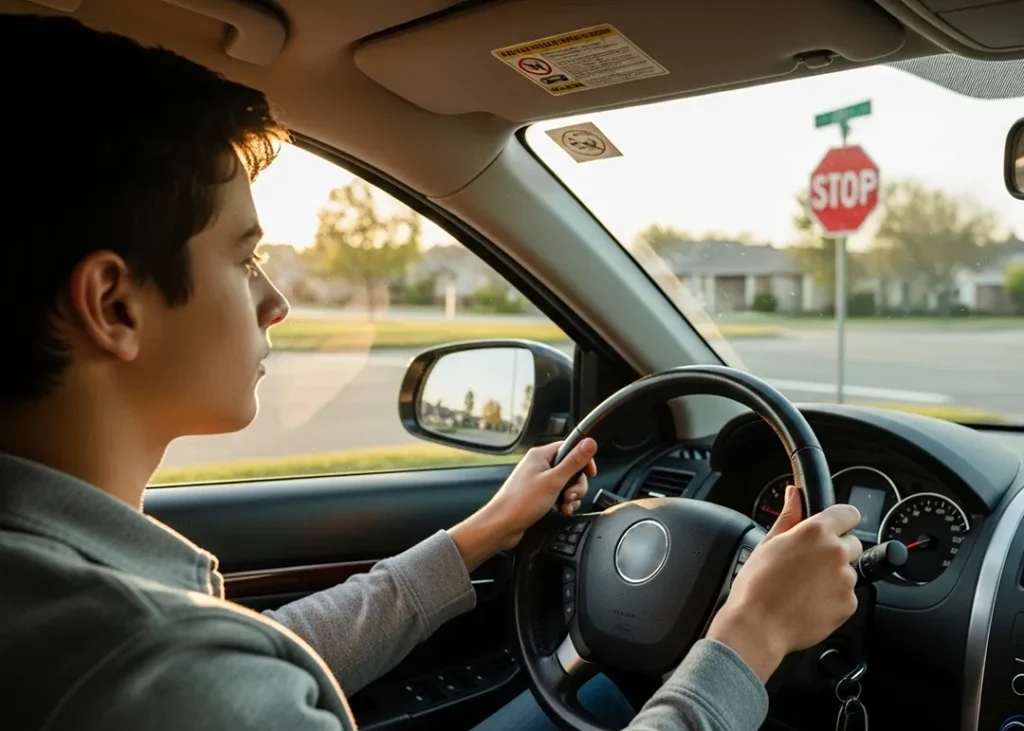
Misinterpreting or ignoring traffic signs, such as stop signs, yield signs, or speed limit signs, is a major red flag for examiners. This demonstrates a fundamental lack of knowledge of road rules.
How to Avoid It: Regularly review your state’s driver’s handbook. While driving, actively scan for and identify signs and signals well in advance so you have plenty of time to react appropriately.
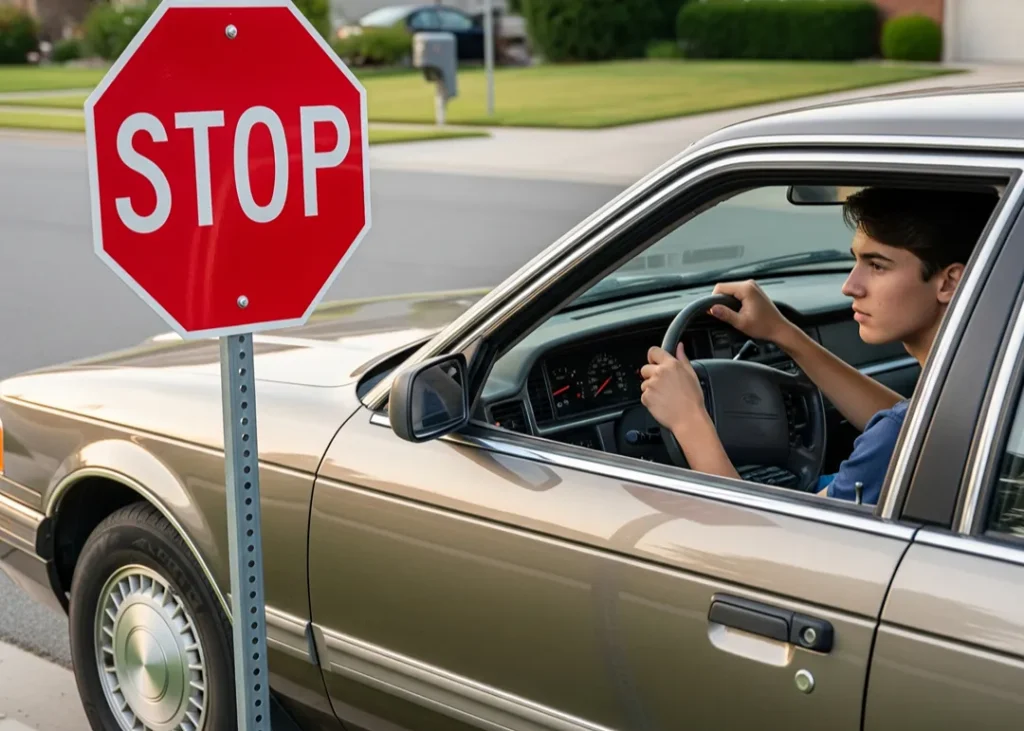
Many applicants fail because they do not come to a complete stop at a stop sign. A “rolling stop,” where the wheels are still in motion, is considered an automatic failure in many jurisdictions. You must come to a complete stop behind the white line.
How to Avoid It: At a stop sign, press the brake firmly until the car comes to a complete stop. Count to three in your head to ensure you’ve stopped fully before checking for traffic and proceeding.
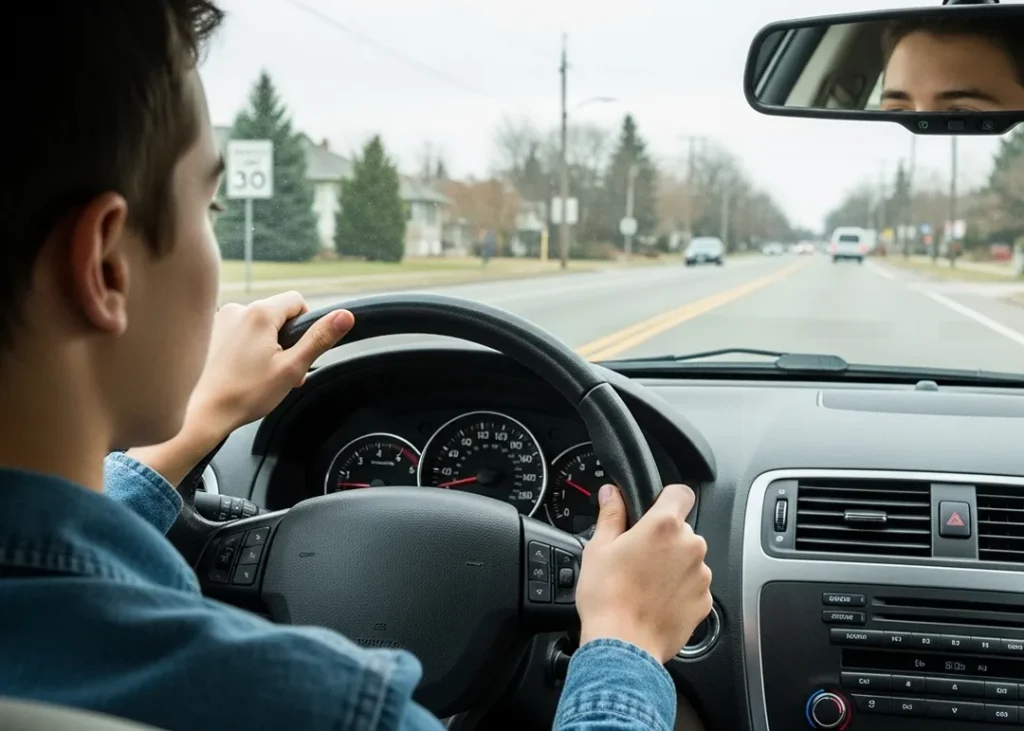
Maintaining an appropriate speed is crucial. Driving over the speed limit is an obvious fail, but driving too slowly can be just as dangerous, as it disrupts the flow of traffic and indicates a lack of confidence in one’s driving abilities.
How to Avoid It: Constantly monitor your speedometer and be aware of the posted speed limit. Adjust your speed according to conditions such as weather, traffic, and construction zones. In a 30 mph zone, try to stay between 28 and 30 mph unless hazards require you to slow down.
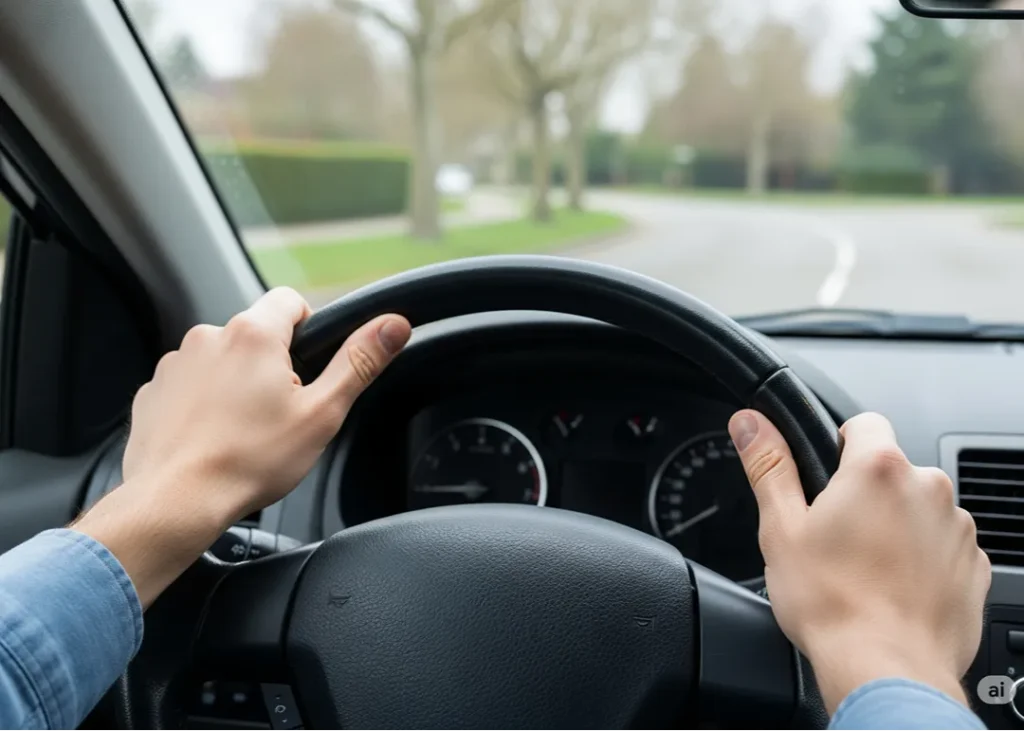
Examiners look for smooth and controlled steering. Common faults include one-handed steering, letting the wheel slide through your hands after a turn (“dry steering”), or overcorrecting on slight curves.
How to Avoid It: Practice the “push-pull” or “hand-over-hand” steering methods. Keep both hands on the wheel unless you are changing gears. Practice on quiet roads to get a feel for making smooth, controlled turns.
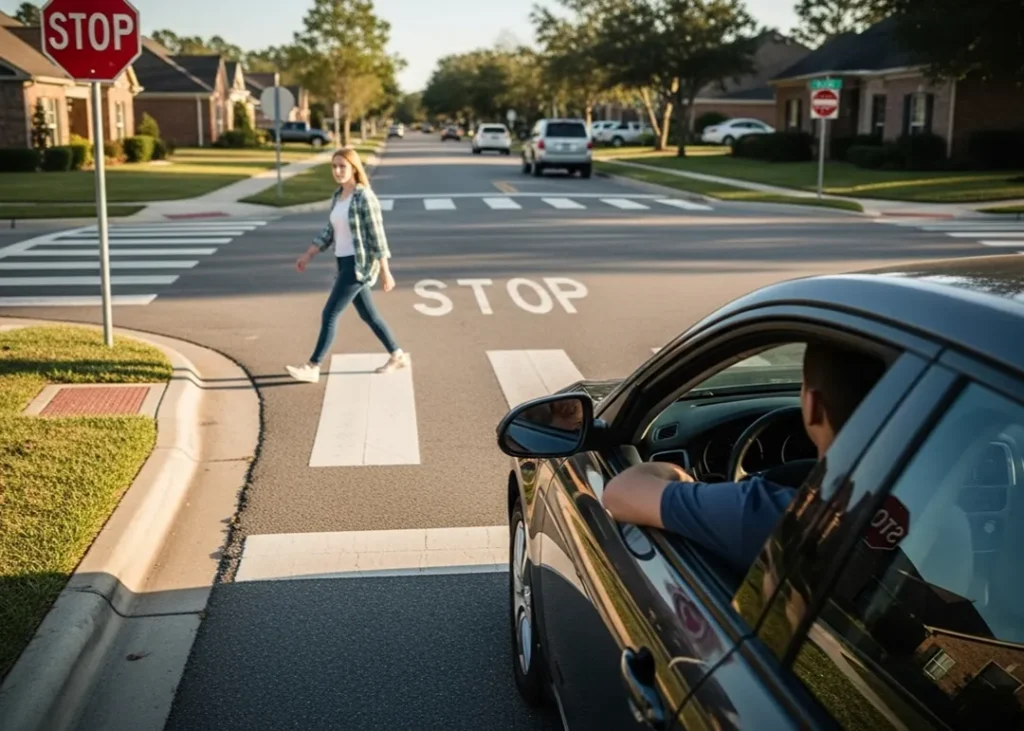
Failing to understand or yield the right-of-way is a critical safety error. This includes failing to yield to pedestrians in a crosswalk, not yielding to traffic with the right-of-way at an intersection, or incorrectly navigating a four-way stop.
How to Avoid It: Study the right-of-way rules in your driver’s handbook until they are second nature. When in doubt, it is safer to yield the right-of-way than to risk a collision. Always be prepared to stop for pedestrians at all times.
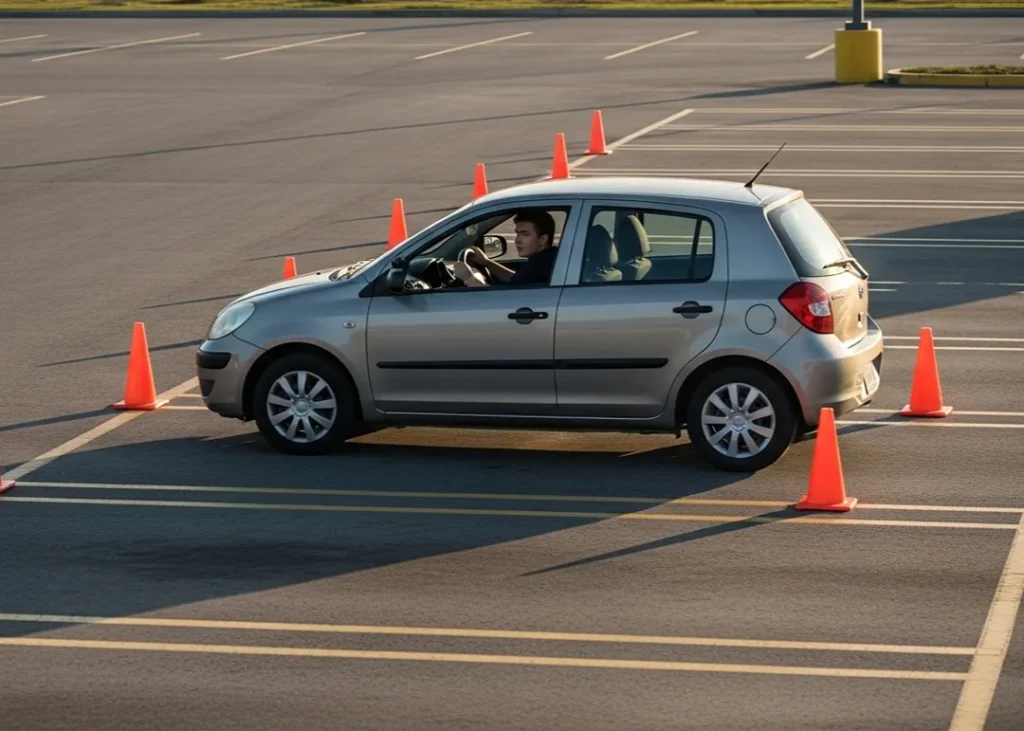
Parallel parking, three-point turns, and reversing are standard test components. Hitting the curb, taking too many attempts, poor observation, or ending up too far from the curb are frequent reasons for losing points or failing.
How to Avoid It: Practice, practice, practice. Find an empty parking lot and use cones to simulate parking spaces. For each maneuver, focus on slow, controlled movements and continuous observation in all directions.
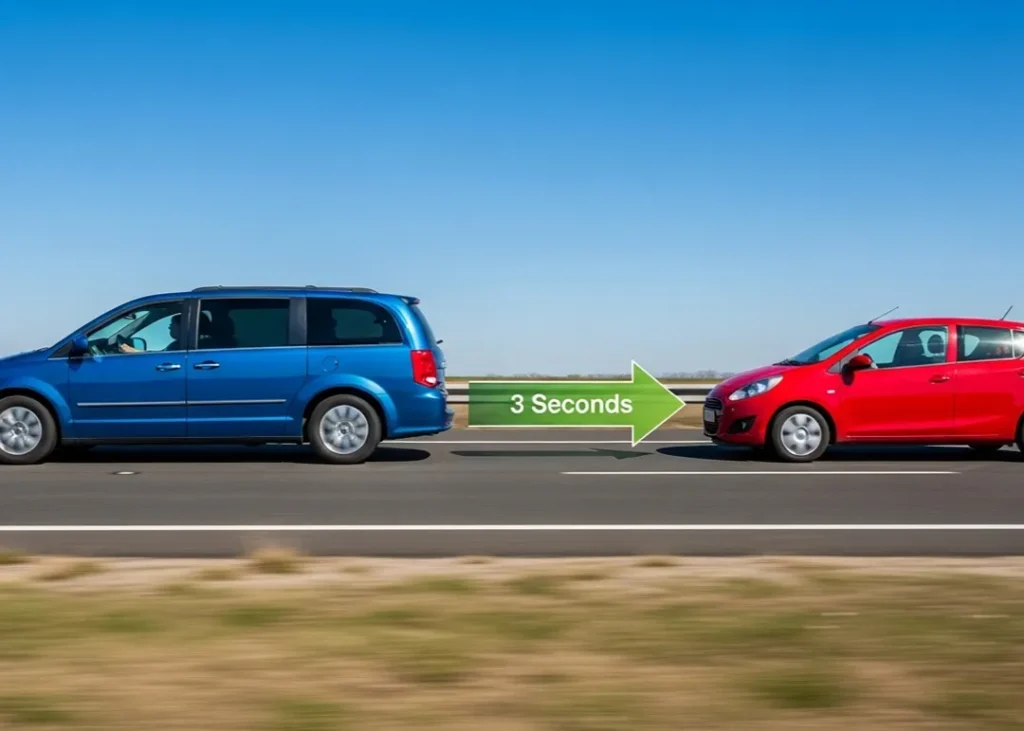
Tailgating, or following the vehicle ahead too closely, reduces your reaction time and is a common driving fault. Examiners look for a safe following distance of at least three seconds.
How to Avoid It: Use the “three-second rule.” When the car in front of you passes a fixed object (like a sign), start counting. If you reach the object before you count to three, you are too close. Increase the distance in poor weather.
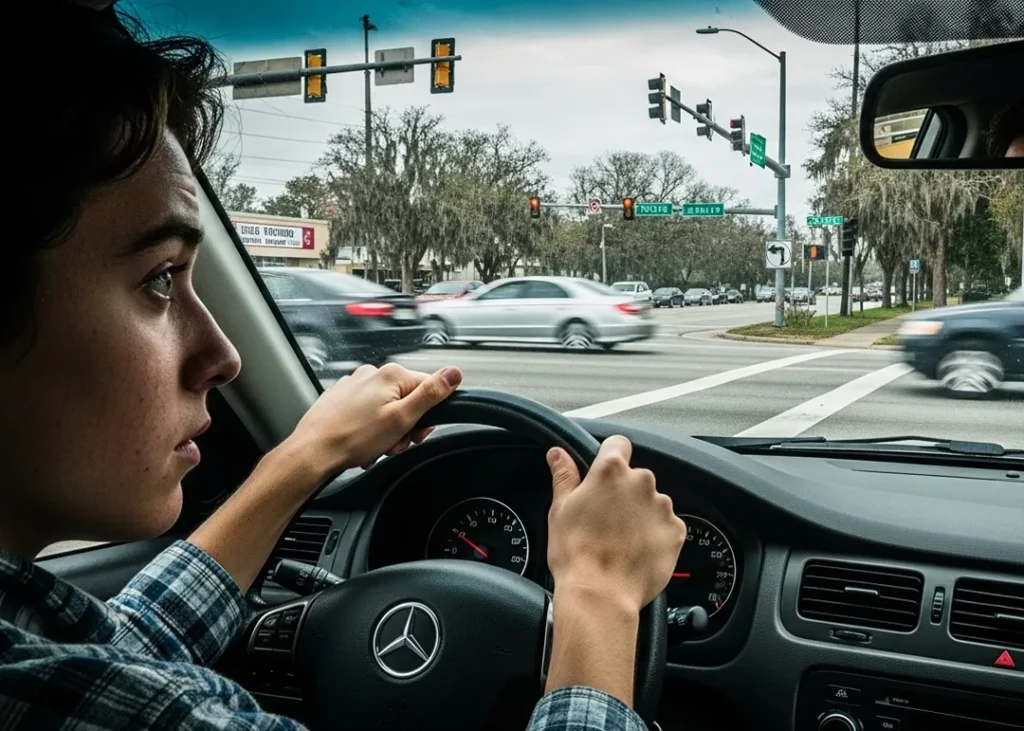
While caution is beneficial, excessive hesitation can signal a lack of confidence and be dangerous. This includes waiting too long to make a turn, stopping unnecessarily at a yield sign, or being overly timid when merging.
How to Avoid It: Confidence comes from experience. The more you practice in complex traffic situations, the better you will become at judging gaps and taking timely, decisive action.

Effective communication with other road users is crucial. Forgetting to signal, signaling too late, or leaving your signal on after a turn can confuse other drivers and lead to dangerous situations.
How to Avoid It: Make signaling a habit for every turn, lane change, or when pulling over. Remember to cancel your signal as soon as your maneuver is complete.
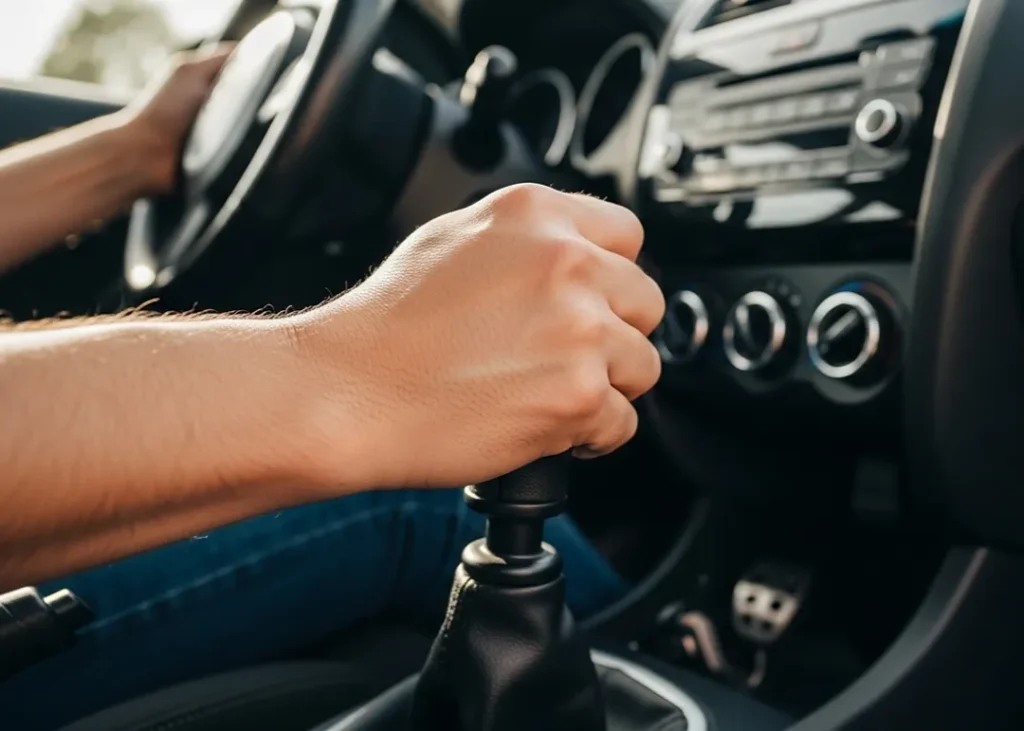
For those testing in a manual vehicle, poor clutch control can lead to stalling the engine, jerky starts, or rolling backward on a hill. These are all considered serious faults.
How to Avoid It: Spend extra time practicing clutch control in a safe area. Find the “biting point” and practice smooth starts on flat ground and hills until it feels natural.

You need to listen carefully to the examiner’s directions. Misunderstanding or forgetting an instruction can lead you to make an incorrect maneuver or turn, which can disrupt the test.
How to Avoid It: Pay close attention, and if you are ever unsure about a direction, it is perfectly acceptable to ask, “Could you please repeat that?” once. It’s better to clarify than to guess.

Learning from a parent or friend is helpful, but it can also lead to picking up bad habits, such as resting a hand on the gear shifter, steering with one hand, or not coming to a complete stop. These are things that an examiner will penalize you for.
How to Avoid It: Take lessons from a professional driving instructor. They are trained to teach you the specific techniques and standards that examiners expect to see during the test.

On the flip side of nerves is overconfidence. Some candidates who feel they are skilled drivers may rush, ignore advice from instructors, or not take the test seriously, leading to sloppy, preventable mistakes.
How to Avoid It: Stay humble and focused. Treat the driving test as the serious evaluation it is. Listen to your instructor’s feedback and focus on demonstrating safe and methodical driving skills.

To help you prepare, here are answers to some of the most frequently asked questions about the driving test.
It varies by location and testing center, but on average, failure rates for the first attempt are typically between 40% and 60%. This is why thorough preparation is so necessary.
Yes. Driving significantly under the speed limit when conditions are normal is considered impeding traffic. It suggests a lack of confidence and can be marked as a serious fault.
Not necessarily. Test scoring usually allows for a certain number of minor errors. However, repeating the same minor mistake multiple times can add up to a failure, and any single dangerous or critical error will result in an automatic fail.
The waiting period varies by state or region. It is typically between 7 and 14 days. Check with your local DMV or licensing agency for the specific rule in your area. Use this time to practice the areas the examiner identified as weaknesses.
Yes, regardless of whether you pass or fail, the examiner will provide a debrief and a score sheet explaining any faults you made. This feedback is invaluable for enhancing your driving skills.

Failing your driving test can be disheartening, but it is not the end of the road. View it as a crucial learning experience. The feedback you receive is a roadmap that shows you exactly which skills to sharpen. With focused practice and a positive mindset, you can address your mistakes, build your confidence, and be fully prepared to succeed on your next attempt. Getting it right is worth the effort.