

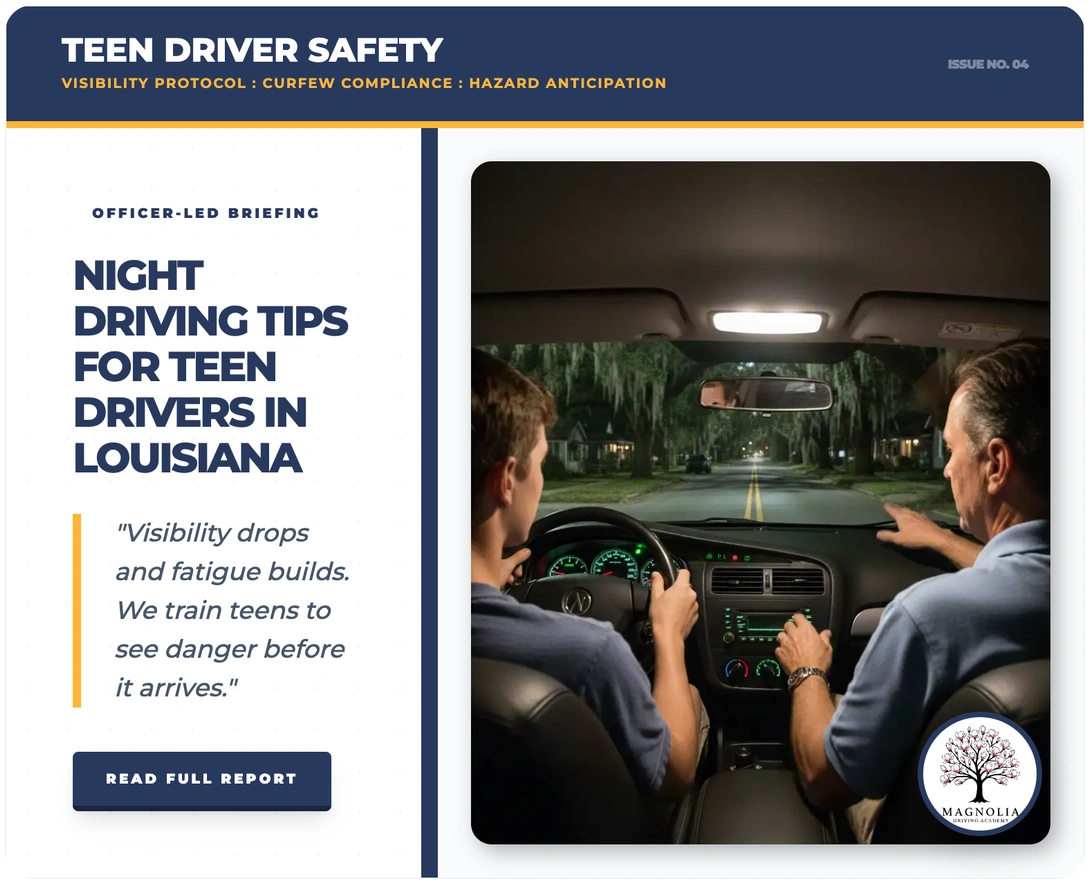
Night driving presents serious risks for teen drivers in Louisiana, from reduced visibility to strict curfews. Learn how parents can protect their teens with proven safety strategies and officer-led driving instruction designed for real nighttime conditions.
Night driving is one of the most dangerous situations for teen drivers in Louisiana due to reduced visibility, fatigue, wildlife activity, and strict state curfews. New drivers have greater difficulty judging speed and distance at night, which is why preparation, limits, and proper training are essential to keeping teens safe.
If you only remember a few things about teen night driving, these are the ones that matter most.
For many parents, nighttime driving is when concern turns into real anxiety. Once the sun goes down, teens face darker roads, fewer visual cues, and more unpredictable drivers. In Ascension Parish, rural highways and sudden rain make those risks even more real.
Night driving changes how the brain processes the road. Visibility shrinks, contrast drops, and reaction time slows. For teens who are still building experience, those changes can quickly overwhelm decision-making.
If your teen is still gaining real road experience, it helps to know what professional instruction actually looks like. Read our guide about what happens during a first behind-the-wheel lesson in Louisiana and how instructors build confidence in real traffic conditions.
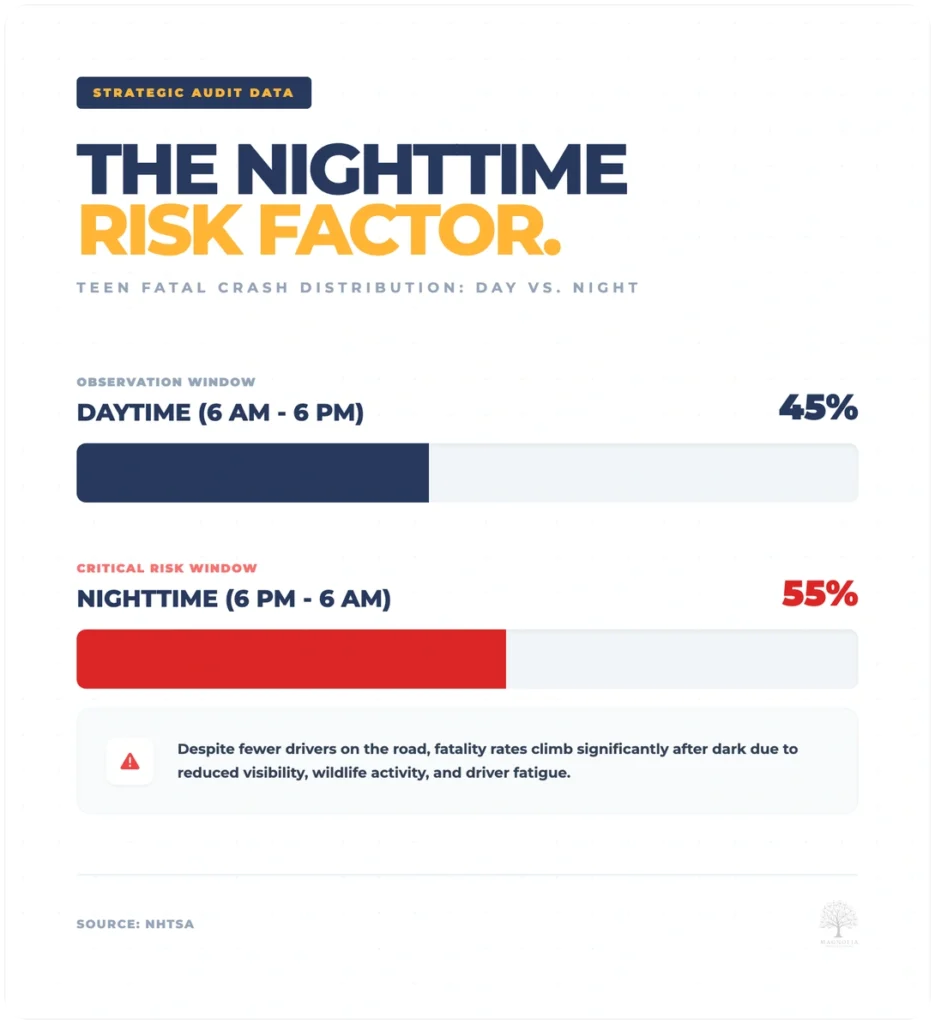
According to the National Highway Traffic Safety Administration, a significant percentage of fatal teen crashes in Louisiana occur between 6:00 PM and 6:00 AM, with rural roads and inexperience being major contributing factors. Understanding these local statistics can motivate parents and teens to prioritize safety when driving at night.
A Gonzales parent recently shared how their teen did not notice a disabled vehicle on Highway 30 at night until they were dangerously close. The road was straight, but glare from headlights and darkness delayed recognition.
Beyond visibility challenges, Louisiana law also places clear limits on when teens should be driving at night. These restrictions exist to reduce exposure during the most dangerous hours.
Under Louisiana’s Graduated Driver Licensing program, teens under 17 with an intermediate license may not drive between 11:00 PM and 5:00 AM unless accompanied by a parent, guardian, or licensed driver age 21 or older. Violating these restrictions can result in fines, license suspension, or other legal penalties, emphasizing the importance of adhering to curfew laws for safety and legal compliance.
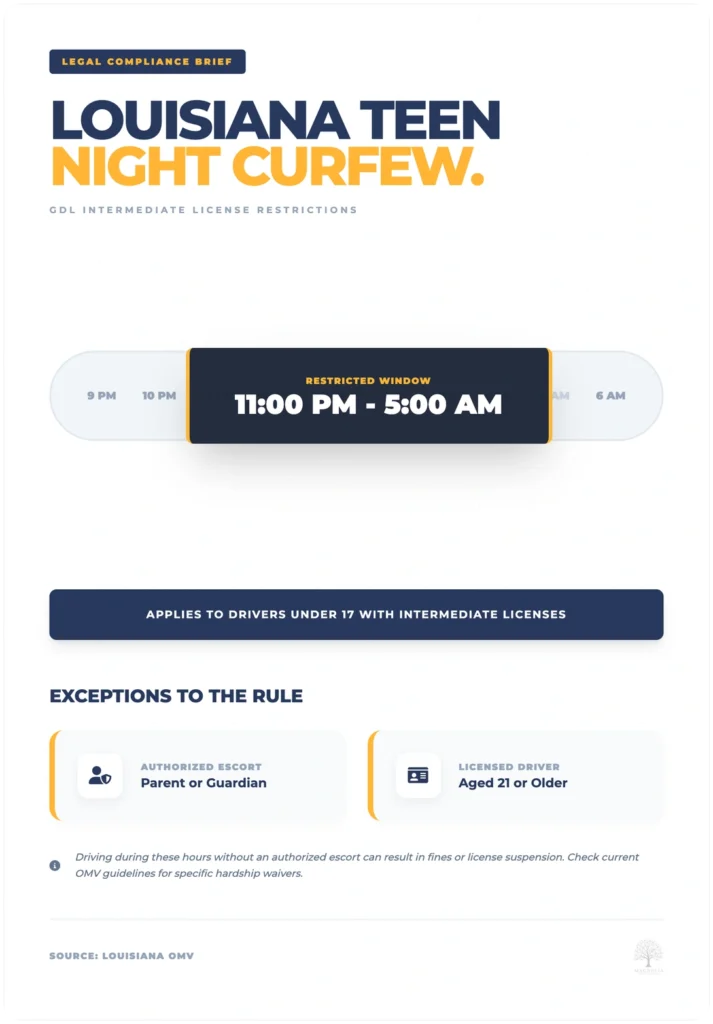
These hours overlap with peak fatigue and impaired driving. Even responsible teens face a higher risk during this window.
Night driving safety is not about a single rule. It is a combination of habits that reduce risk when visibility and reaction time are limited.
Officers advise treating nighttime driving as a different environment, not simply daytime driving with headlights.
Depth perception decreases at night. Slowing down gives teens more time to recognize hazards and react safely.
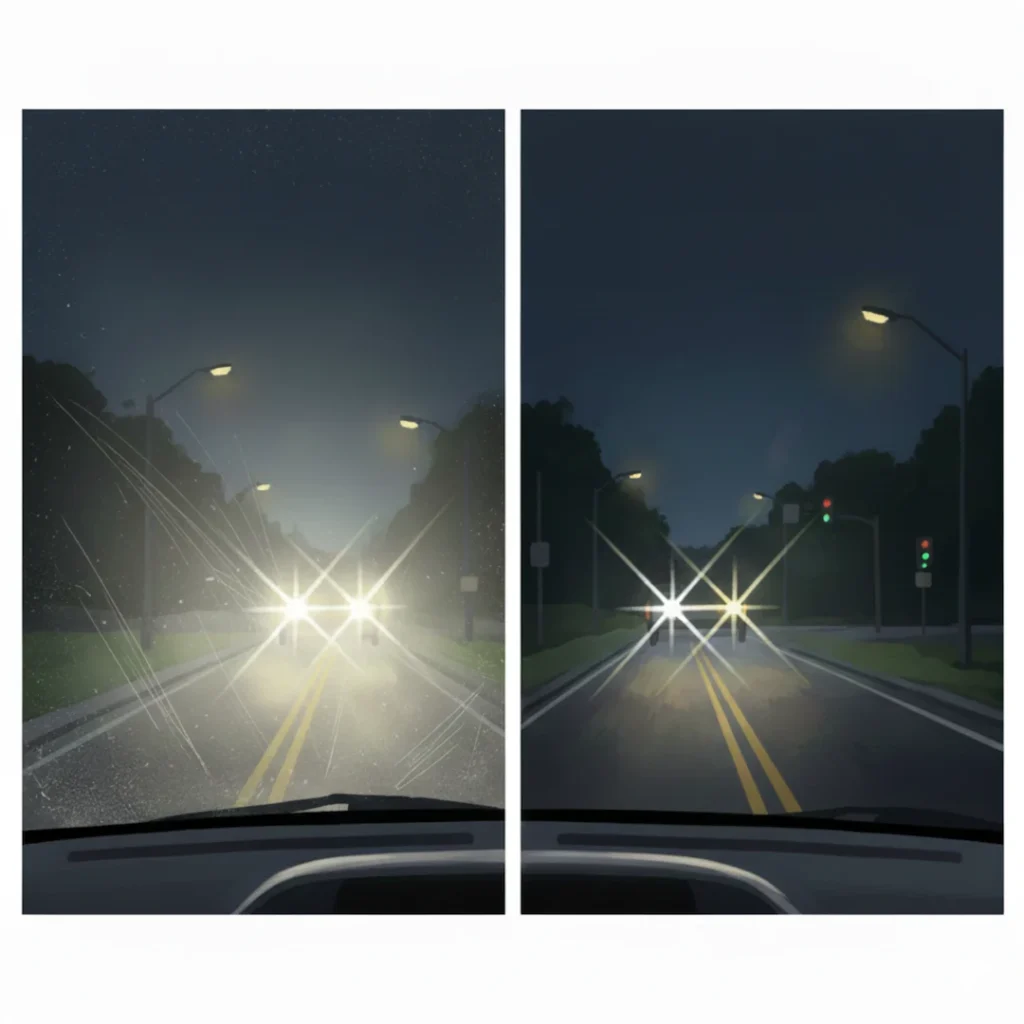
Interior glass haze causes glare from oncoming headlights. Cleaning the inside of the windshield weekly improves night visibility.
Bright dashboards prevent eyes from adjusting to darkness. Lights should be set to the lowest readable level.
High beams are helpful on rural roads, but must be dimmed within 500 feet of oncoming traffic or 200 feet when following another vehicle.

Deer are most active at dusk and after dark in Ascension Parish. Eye reflections are often visible before the animal itself.
Fatigue is one of the most underestimated dangers for teen drivers. At night, tiredness builds faster and attention drops without warning.
Night driving risks increase rapidly when speed or phone use is involved. This teen driver safety guides break down how texting compounds danger and why distraction is especially unforgiving after dark.
Fatigue slows reaction time in a way similar to alcohol impairment. When combined with phone use, it becomes one of the most common contributors to nighttime crashes.
| Risk Factor | Impact On Driving | Officer Recommendation |
| Low Light | Reduced Depth Perception | Increase Following Distance |
| Headlight Glare | Temporary Vision Loss | Look Toward The Fog Line |
| Fatigue | Delayed Reaction Time | Avoid Late-Night Driving |
Parents often ask whether training truly makes a difference after dark. From an officer’s perspective, it does.
Officer-led training focuses on scanning patterns, hazard anticipation, and speed control under low-visibility conditions. These are the same techniques used during nighttime patrols.
Learn More About Magnolia Driving Academy Behind-The-Wheel Training
| Time Of Day | Crash Share | Primary Factor |
| 9 PM – Midnight | 18% | Speed And Inexperience |
| Midnight – 6 AM | 13% | Fatigue And Alcohol |
Most night driving incidents are not caused by reckless teens. They happen because teens are unprepared for how dramatically driving changes after dark. Setting clear boundaries, consistent curfews, and engaging in professional instruction help parents enforce safe practices and reduce risks effectively.
Give Your Teen A Safer Foundation For Night Driving.
Parents often have the same questions when their teen starts driving after dark. These answers address the most common concerns we hear from families in Gonzales and throughout Ascension Parish.
Louisiana law restricts teen drivers under 17 with an intermediate license from driving between 11:00 PM and 5:00 AM unless accompanied by a parent, guardian, or licensed driver age 21 or older. This curfew reduces exposure during peak fatigue and impaired driving hours. Officer-led instruction helps families understand how these rules apply in real life.
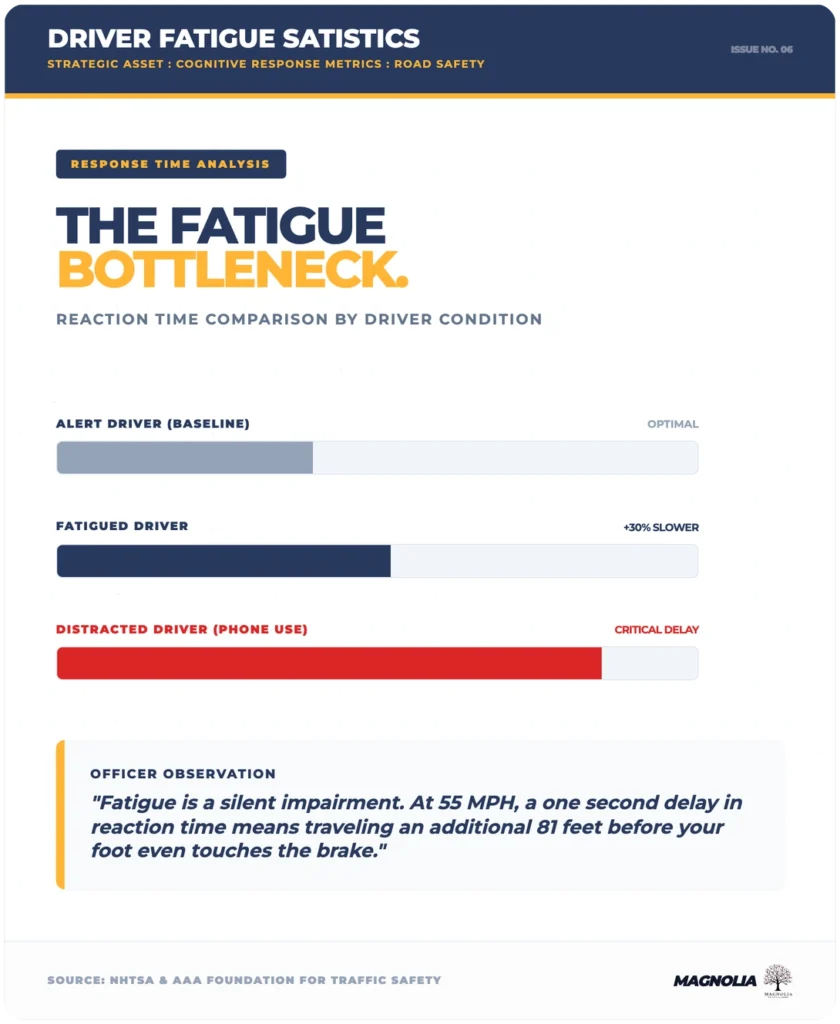
At night, teens experience reduced depth perception, more glare, and slower reaction times. These factors make it harder to recognize hazards early. Inexperience compounds the risk, especially on dark parish roads. Professional training teaches teens how to scan, slow down, and anticipate danger sooner.
Parents should ensure headlights are clean and properly aimed, windshields are cleaned inside and out, and dashboard lights are dimmed. Teens should also avoid staring at oncoming headlights. Behind-the-wheel training reinforces these habits until they become automatic.
High beams should be used on dark, unlit roads when no other vehicles are nearby. Louisiana law requires dimming them within 500 feet of oncoming traffic or 200 feet when following another vehicle. Learning when and how to use high beams safely is part of structured driving instruction.
Rain at night significantly increases risk by creating glare and hiding lane markings. Teens should gain confidence driving in the rain during daylight before attempting nighttime conditions. Instructor-guided practice helps teens learn how to adjust speed and following distance safely.
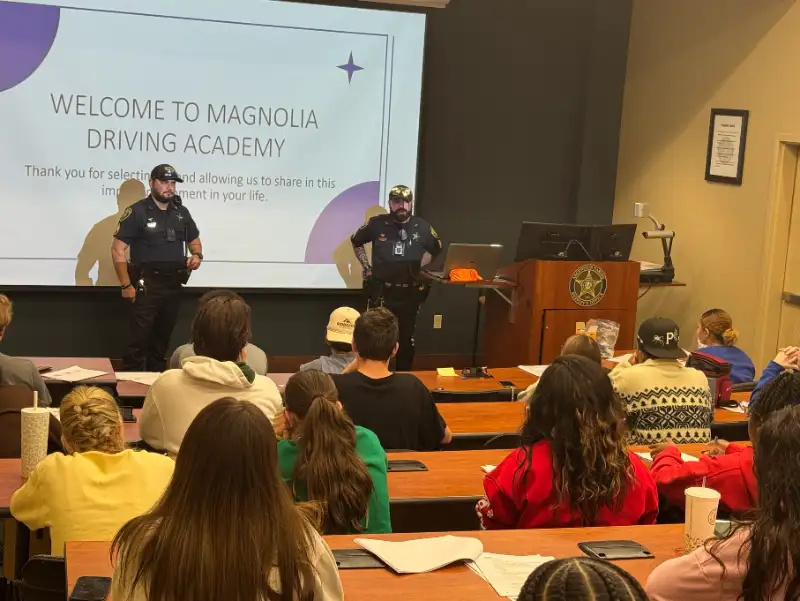
Yes. Magnolia Driving Academy includes night-driving safety concepts in its officer-led behind-the-wheel training. Students learn scanning techniques, speed control, and hazard recognition through real-world law enforcement experience. Parents can view class options to ensure their teen is adequately prepared.